
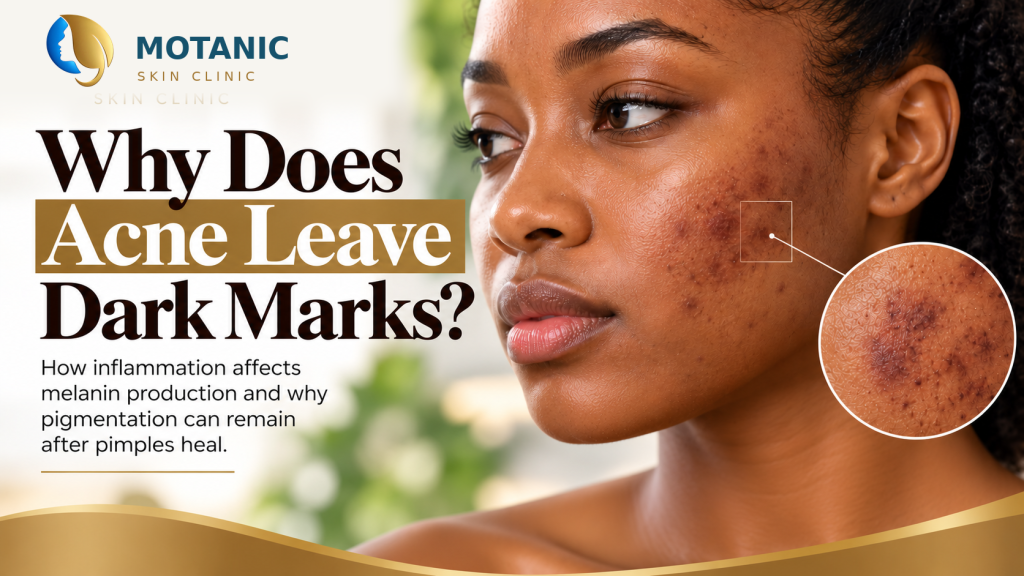
Motanic Skin Knowledge Library · Pigmentation & Dark Marks Why does acne leave dark marks even after a pimple heals? The answer involves inflammation, melanocyte activity and changes in melanin production. Understanding these processes helps explain why pigmentation can remain after acne resolves—and why a dark mark is not automatically a scar. In this article […]
Category Archives: Skin Concerns
Evidence-based advice on acne, pigmentation, acne scars, oily skin and common skin concerns.
09
Oct
Oct
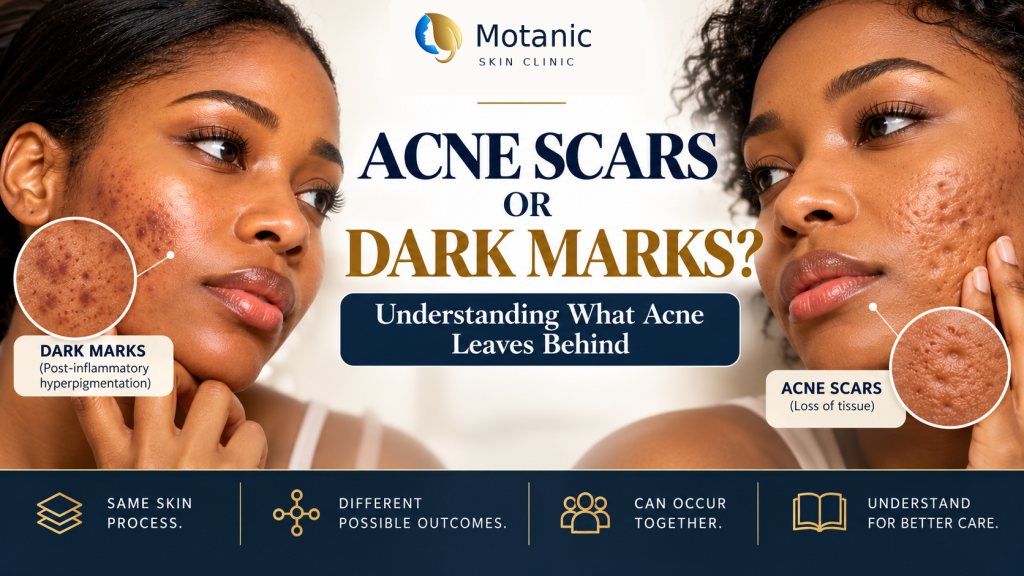
Motanic Skin Knowledge Library · Acne Scars & Skin Texture Acne scars vs dark marks: the difference is not simply how dark a spot looks. One involves pigmentation; the other involves changes in skin structure. Both can occur together. Here is how to understand what acne may leave behind—and why the distinction matters. In this […]
17
Sep
Sep
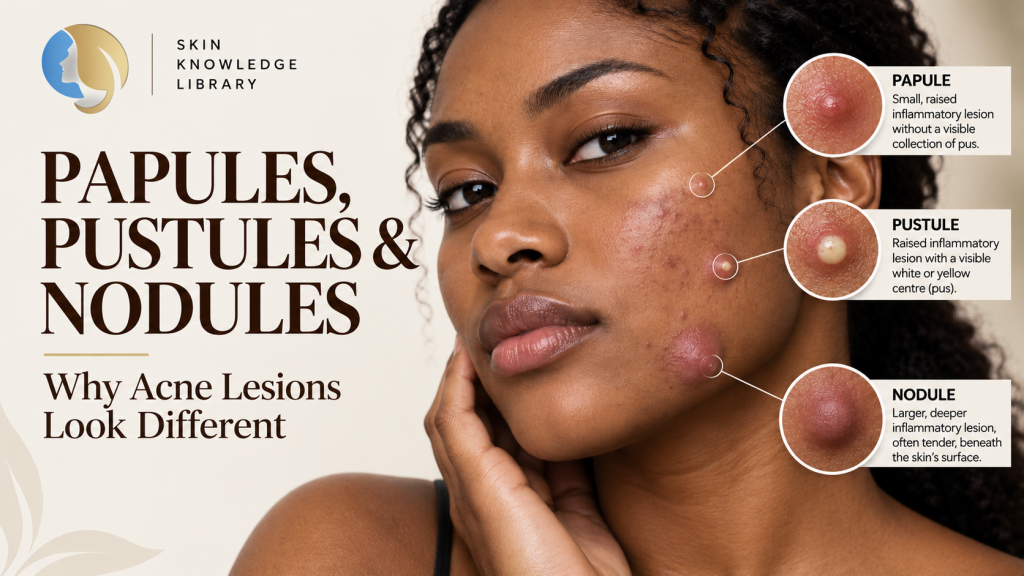
The different types of acne lesions can look surprisingly different from one another. Look closely at acne-prone skin and you may see a blackhead, a small skin-coloured bump, a raised inflammatory lesion, a spot with a visible white or yellow centre, or perhaps a deeper, tender lump beneath the surface. In everyday conversation, all of […]

16
Sep
Sep
Cutibacterium acnes has acne in its name. It lives in the follicles where acne develops. And it can interact with the immune system in ways that contribute to inflammation. So the conclusion seems obvious: bacteria causes acne. Except there is a problem with that explanation. C. acnes also lives on healthy skin. It is a […]
05
Sep
Sep
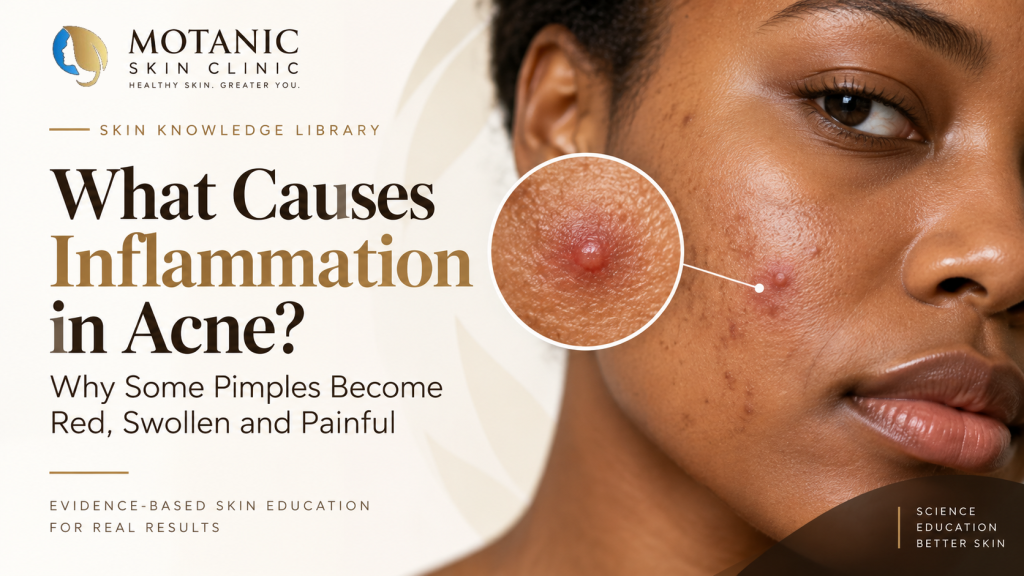
A blackhead can sit quietly on the skin for weeks without feeling sore. Then there’s the completely different kind of acne lesion — red, raised, tender, sometimes genuinely painful. So what changed? The obvious answer is inflammation. That’s true — but there’s an important complication: inflammation doesn’t necessarily begin the moment a pimple turns red. […]
05
Sep
Sep
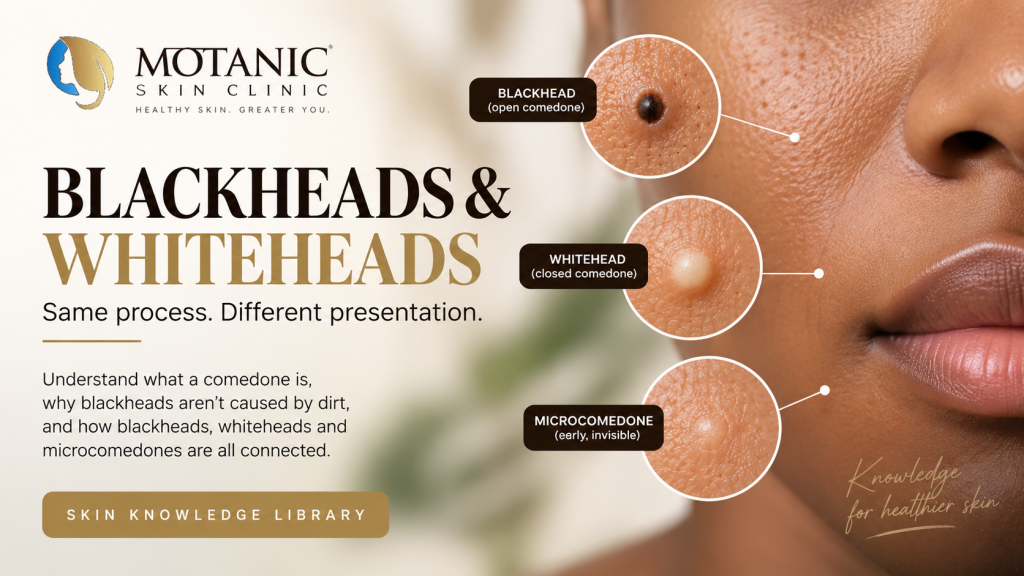
Blackheads and whiteheads look different enough that it’s easy to think of them as two separate problems. Biologically, they’re much more closely related than they appear. What does “comedone” actually mean? A comedone is simply a clogged follicle associated with acne.1 It’s an umbrella term — not one specific type of blemish, but a family […]
If you’ve ever had oily, acne-prone skin, you’ve probably been told that the oil is the problem. It sounds logical. Your skin feels oily. Your pores become clogged. Pimples appear. So remove the oil, and the acne should improve. But the relationship between sebum and acne isn’t quite that simple. But that explanation leaves out […]
In Why Do Pores Get Clogged? we described what happens when normal shedding inside the follicle starts to change: cells that would ordinarily separate and leave begin to accumulate instead. That change has a name in dermatology: follicular hyperkeratinisation. It’s worth understanding properly, because it’s one of the terms you’ll see repeatedly if you read […]
If clogged pores were simply caused by dirty skin, washing your face more thoroughly should solve them. But it doesn’t. That’s because what we call a clogged pore isn’t simply something sitting on top of your skin. It’s a change happening inside a structure just beneath the surface — and understanding that change is an […]